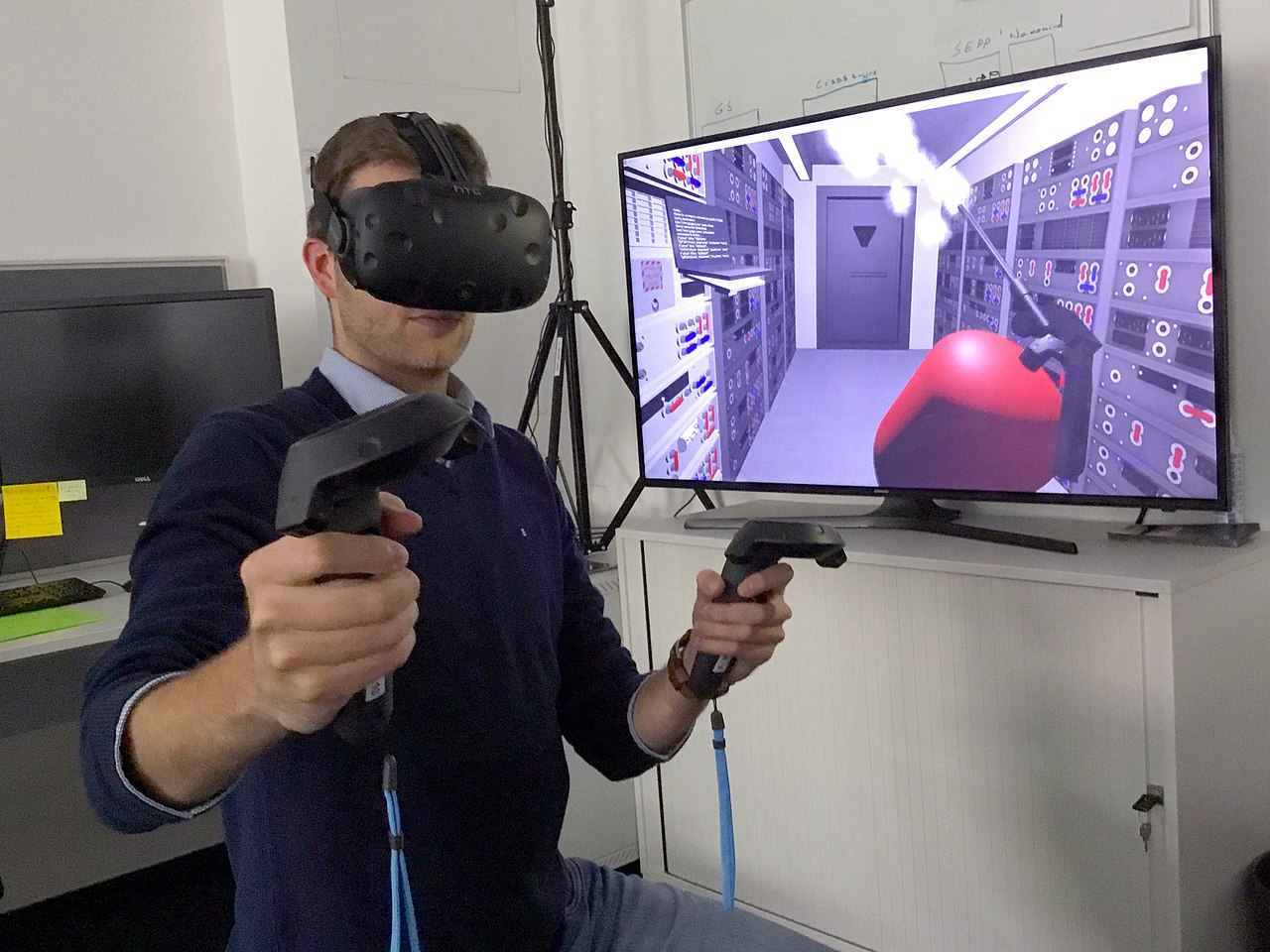
Virtual Reality (VR) is no longer a distant sci-fi concept; it's a rapidly evolving technology transforming how we interact with digital worlds. From immersive gaming to sophisticated training simulations, VR redefines human-computer interaction by placing users directly within a simulated environment. This comprehensive guide will unravel the intricacies of VR, from its fundamental definition and underlying technologies to its diverse applications, including a deep dive into the incredibly realistic experience of a VR flight simulator cockpit.
What Exactly is Virtual Reality?
At its core, Virtual Reality is a simulated experience that can be similar to or completely different from the real world. It aims to immerse users in a digital environment, making them feel as if they are physically present within it. This immersion is achieved by isolating the user's senses (primarily sight and sound) from the real world and replacing them with computer-generated stimuli.
Unlike traditional screens that display content in front of you, VR wraps the content around you, tracking your head and body movements to create a seamless, interactive experience. The term "virtual reality" itself encapsulates this concept: "virtual" meaning near or nearly, and "reality" referring to what we experience as human beings. It’s about creating a perceived reality that doesn't physically exist.
The magic of VR lies in its ability to trick our brains into believing we are somewhere else. This perception is powerful, offering not just entertainment but profound potential for education, training, and even social interaction in digital spaces. To truly understand the breadth of what VR offers, it's worth exploring the wide range of Exploring Virtual Reality: From Headsets to Immersive Experiences available today.
The Core Technology Behind VR
The immersive experience of VR is powered by a sophisticated blend of hardware and software. These components work in concert to create the illusion of presence within a virtual world:
- VR Headsets (HMDs): These are the most recognizable components of VR. Head-Mounted Displays contain high-resolution screens positioned very close to the eyes, often with specialized lenses that magnify the image and provide a wide field of view. Modern headsets boast impressive refresh rates and pixel densities to minimize motion sickness and screen-door effect, offering a crystal-clear window into virtual worlds. Considerations like comfort, weight, and visual fidelity are paramount when selecting a headset, as detailed in guides like Best VR Headsets 2026: PCMag's Guide to Immersive VR.
- Tracking Systems: For VR to feel real, the system must know where your head and hands are in physical space.
- Positional Tracking: Monitors your movement within a given area (e.g., walking forward, leaning left). This is crucial for room-scale VR.
- Rotational Tracking: Tracks the orientation of your head (e.g., looking up, down, left, right).
- Input Devices: Beyond head tracking, users need to interact with the virtual world. VR controllers often feature haptic feedback, buttons, joysticks, and trigger mechanisms, allowing users to pick up virtual objects, fire weapons, or navigate menus. Some advanced systems also support hand tracking, letting users use their actual hands as input.
- Powerful Computing: Rendering two separate high-resolution images (one for each eye) at high frame rates requires significant processing power, whether from a high-end PC, a dedicated console, or the headset's integrated mobile processor.
- Audio: Spatial audio is vital for immersion. 3D audio simulates sound coming from specific directions and distances, enhancing the sense of presence and realism.
Diverse Applications of Virtual Reality
While often associated with gaming, VR's utility extends far beyond entertainment. Its ability to create immersive, interactive environments makes it invaluable across numerous sectors:
Gaming and Entertainment
Gaming was an early and obvious application for VR. Titles like Beat Saber, Half-Life: Alyx, and Resident Evil 4 VR showcase the unparalleled immersion VR brings, offering experiences impossible on traditional screens. Beyond gaming, VR is used for interactive storytelling, virtual concerts, and even virtual tourism, allowing users to explore remote locations from their living rooms.
Training and Education
VR provides safe, controlled, and cost-effective environments for training in high-stakes professions. Surgeons can practice complex procedures, soldiers can prepare for combat scenarios, and engineers can familiarize themselves with intricate machinery without risk or expensive physical prototypes. This realm is where simulation truly shines.
Design and Prototyping
Architects, automotive designers, and product developers use VR to visualize and interact with 3D models at full scale. This allows for early identification of design flaws, collaborative reviews, and a better understanding of spatial relationships before any physical construction begins, saving time and resources.
Healthcare and Therapy
In healthcare, VR is employed for pain management, anxiety reduction, and exposure therapy for phobias and PTSD. It creates controlled environments for patients to confront fears or engage in therapeutic exercises, guided by professionals.
Soaring to New Heights: The VR Flight Simulator Cockpit Experience
Among the most compelling applications of VR, particularly for enthusiasts and professionals, is its integration into flight simulation. A VR flight simulator cockpit isn't just a game; it's a highly immersive and realistic training and entertainment platform that meticulously recreates the experience of piloting an aircraft.
Imagine strapping on a VR headset and instantly finding yourself not in your living room, but in the pilot's seat of an F/A-18 Hornet, a Boeing 747, or a historical Spitfire. All around you are the intricate dials, switches, and displays of a real cockpit. Looking left, you see the wingtip; looking up, the canopy; looking down, your virtual lap where a detailed control stick might be. This is the power of a VR flight simulator cockpit.
Components of an Ultimate VR Flight Simulator Cockpit:
- High-Resolution VR Headset: Crucial for clear instrumentation and distant visual cues (e.g., runways, other aircraft). A wide field of view and high refresh rate minimize motion sickness and enhance realism.
- Dedicated Flight Controls: This is where realism truly takes off.
- HOTAS (Hands-On Throttle-And-Stick): A dedicated flight stick and separate throttle quadrant replicate actual aircraft controls, providing precise input for pitch, roll, yaw, and engine power.
- Rudder Pedals: Essential for controlling yaw (side-to-side movement) and braking on the ground, adding another layer of authenticity.
- Physical Cockpit Frame: While not strictly necessary for VR, a physical frame that mimics a real cockpit, often with a racing seat, adds to the tactile immersion. It provides a stable mounting point for controls and grounds you in the virtual space.
- Haptic Feedback Systems: Advanced setups might include bass shakers or motion platforms that provide tactile feedback, simulating engine rumble, turbulence, gear retraction, or even G-forces, further blurring the line between virtual and real.
- Powerful PC: Running demanding flight simulators in VR requires a robust graphics card and processor to maintain high frame rates and visual fidelity.
Benefits of a VR Flight Simulator Cockpit:
- Unmatched Immersion: The 360-degree view and accurate head tracking make you feel truly present in the aircraft. Looking around a virtual cockpit, seeing virtual hands operate virtual controls, and observing the environment out of the window is profoundly more engaging than a flat screen.
- Enhanced Situational Awareness: Being able to naturally look around the cockpit, check instruments with a glance, and spot targets or air traffic improves spatial understanding and realism significantly.
- Realistic Training: For aspiring pilots or those looking to stay sharp, VR flight simulators offer an incredibly realistic environment to practice procedures, emergency maneuvers, and navigation without the cost or risk of real-world flight.
- Accessibility: Experience flying complex aircraft that would otherwise be inaccessible, from historical warbirds to modern fighter jets and commercial airliners, all from the comfort of your home.
Setting up an effective VR flight simulator cockpit involves balancing budget with desired realism. Starting with a good headset and a basic HOTAS system can offer a fantastic experience, with options to upgrade to more elaborate physical cockpits and motion platforms as interest and budget allow.
The Future of Virtual Reality
The trajectory of VR points towards even greater realism, accessibility, and integration into daily life. We can anticipate:
- Lighter, More Comfortable Headsets: Reducing bulk and improving ergonomics will make VR more enjoyable for extended periods.
- Higher Resolution and Wider FOV: Displays will become sharper, making the virtual world indistinguishable from reality.
- Advanced Haptics and Feedback: Full-body haptics, motion platforms, and even smell simulation could emerge, engaging more senses.
- Seamless Integration with AR (Augmented Reality): Mixed Reality (MR) devices will allow digital content to be seamlessly overlaid onto the real world, offering unprecedented utility.
- Ubiquitous Social VR: Virtual spaces for work, social interaction, and events will become increasingly common and sophisticated.
As the technology matures, the lines between our physical and virtual realities will continue to blur, opening up possibilities we can only begin to imagine today.
Conclusion
Virtual Reality is a transformative technology that continues to push the boundaries of human experience. From its foundational principles of immersion and interaction to the complex hardware that brings digital worlds to life, VR offers a gateway to limitless possibilities. Whether you're exploring fantastical realms in a game, practicing life-saving skills in a simulated environment, or experiencing the thrill of flight from a fully realized VR flight simulator cockpit, VR promises experiences that are not just seen, but felt. The journey of VR is still unfolding, and its potential to reshape how we learn, work, and play is truly immense.